Glass Sculptures
Ocean patterns
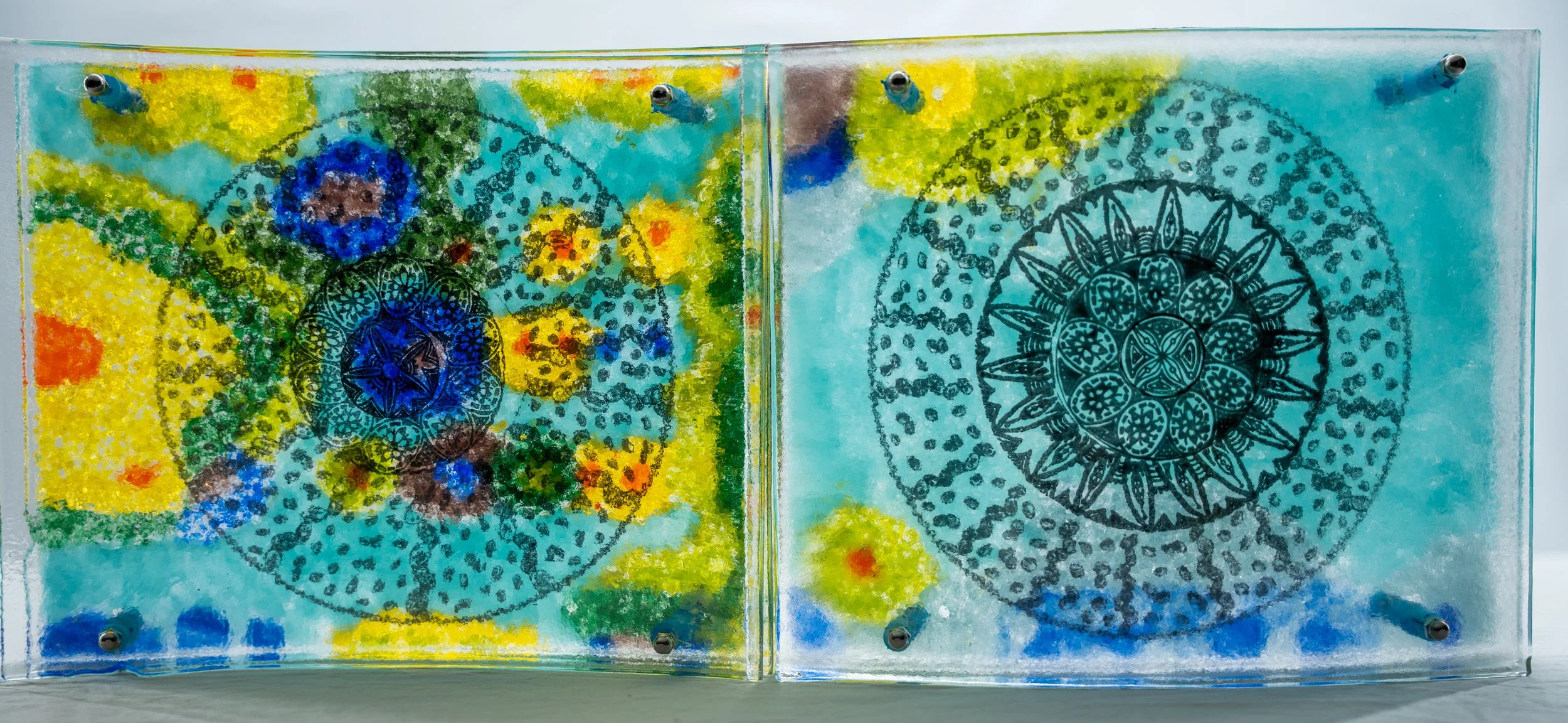
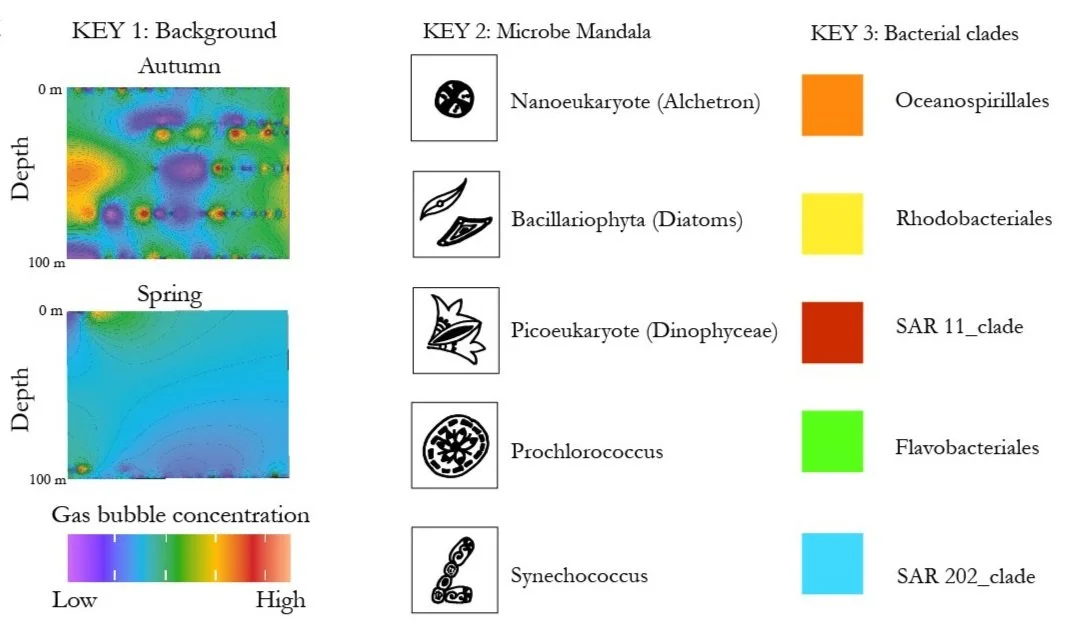
The glass sculpture Ocean Patterns features a wave structure that embodies the dynamic movement of the ocean. This multi-layered artwork employs the fused glass technique in conjunction with mandala-inspired Zentangle forms. Zentangle is a type of doodle art technique using repetitive patterns. Each crest and trough of the wave is adorned with informative elements. The backgrounds of the crests and troughs differ, symbolizing seasonal fluctuations in the gaseous bubble chemicals known as volatile organic compounds present in the ocean (Key 1). Each crest and trough have mandalas that are organized into concentric circles across four layers. Each circle represents a class of phytoplankton, also known as algae (microscopic, plant-like species), that serve as the ocean's primary producers (Key 2). Variations between the two mandalas illustrate seasonal changes in the relative abundances of phytoplankton. The background variations illustrate the amounts of VOCs produced by the phytoplankton during their seasonal shifts. The glass sculpture is designed to be read from top to bottom, reflecting the air-sea interface at the top and extending to a depth of 100 meters below the ocean's surface. It highlights the seasonal changes occurring within the ocean, underscoring the important role that these producers play in the marine ecosystem.
Bacterial ballet
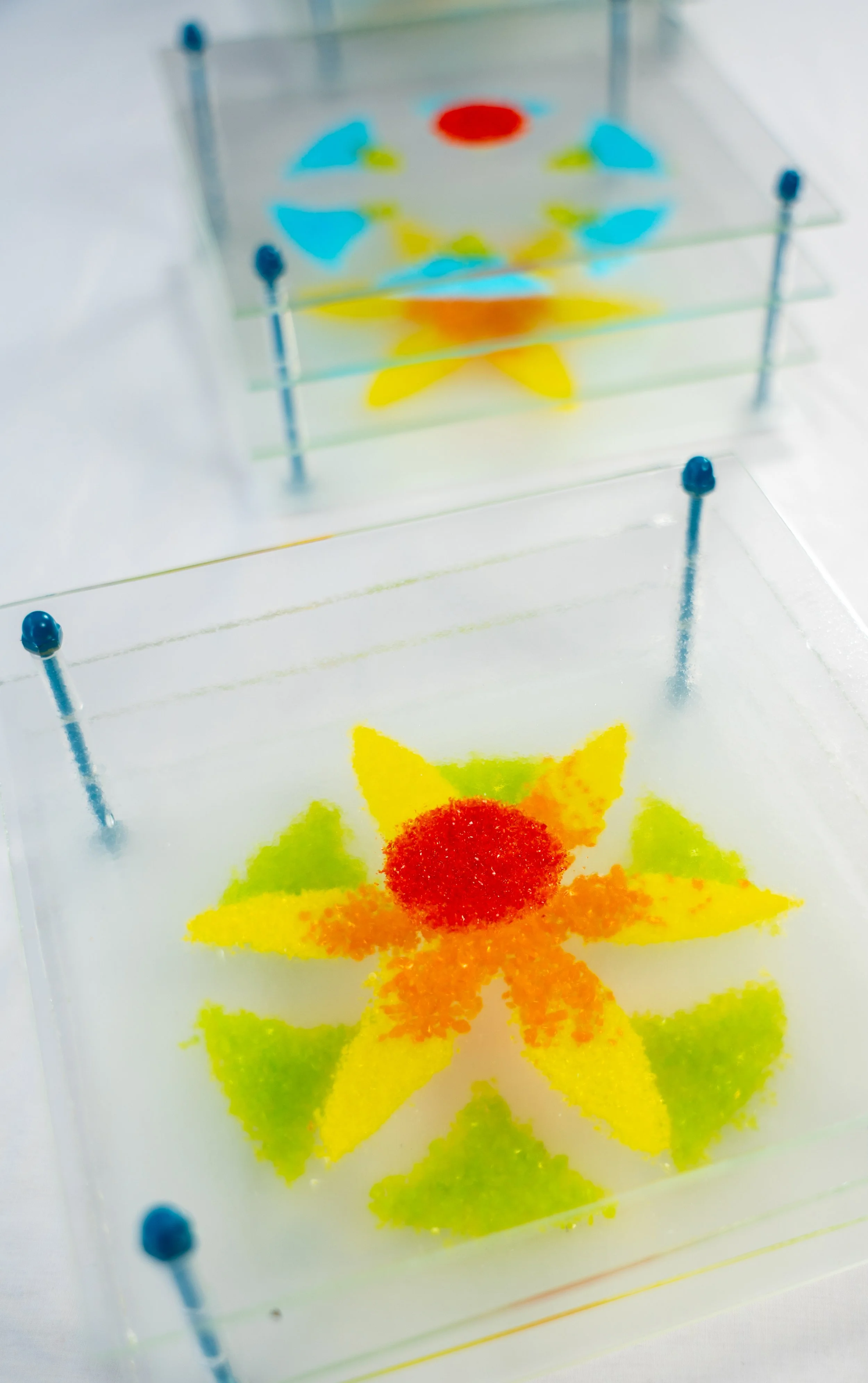
Bacterial Ballet is a three-piece, multi-layered sculpture composed of 6 X 6-inch squares. The spacing between each glass layer represents 25 meters of ocean depth. It is a top-view structure that represents diverse bacteria at different depths during each season. Each piece represents one season, and the vibrant colors represent a single bacterial clade (Key 3). Subtle pattern differences and shifts in the bacterial clade at different depths of the glass column represent the influence of seasons on bacterial communities in the ocean as a response to changing environments. This piece highlights the shifts in bacterial composition at different depths which creates their “dance” in the ocean.
Microscopic View of the Phycosphere
This 12-inch glass plate depicts a microscopic view of the region of water surrounding the algae known as the phycosphere. The phycosphere is like a treasure trove for microorganisms, such as bacteria, that surround the algae, filled with tasty treats. The bacteria position themselves close to the algae or on its surface. The bacteria that reside in the phycosphere and near algae are known as planktonic, whereas bacteria that cling to the algae or lie flat on it are called attached bacteria.
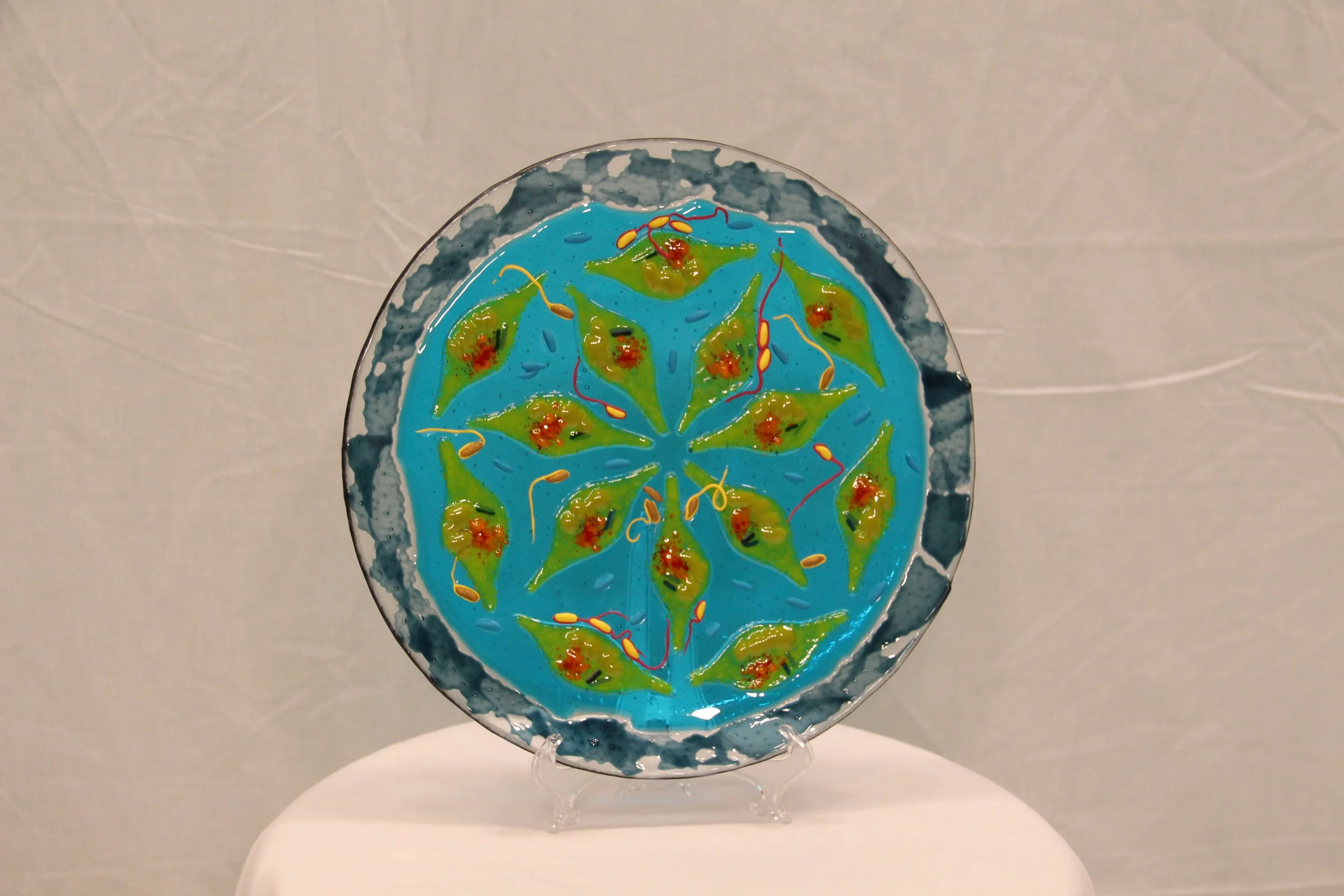
Diatom habitat in oceans
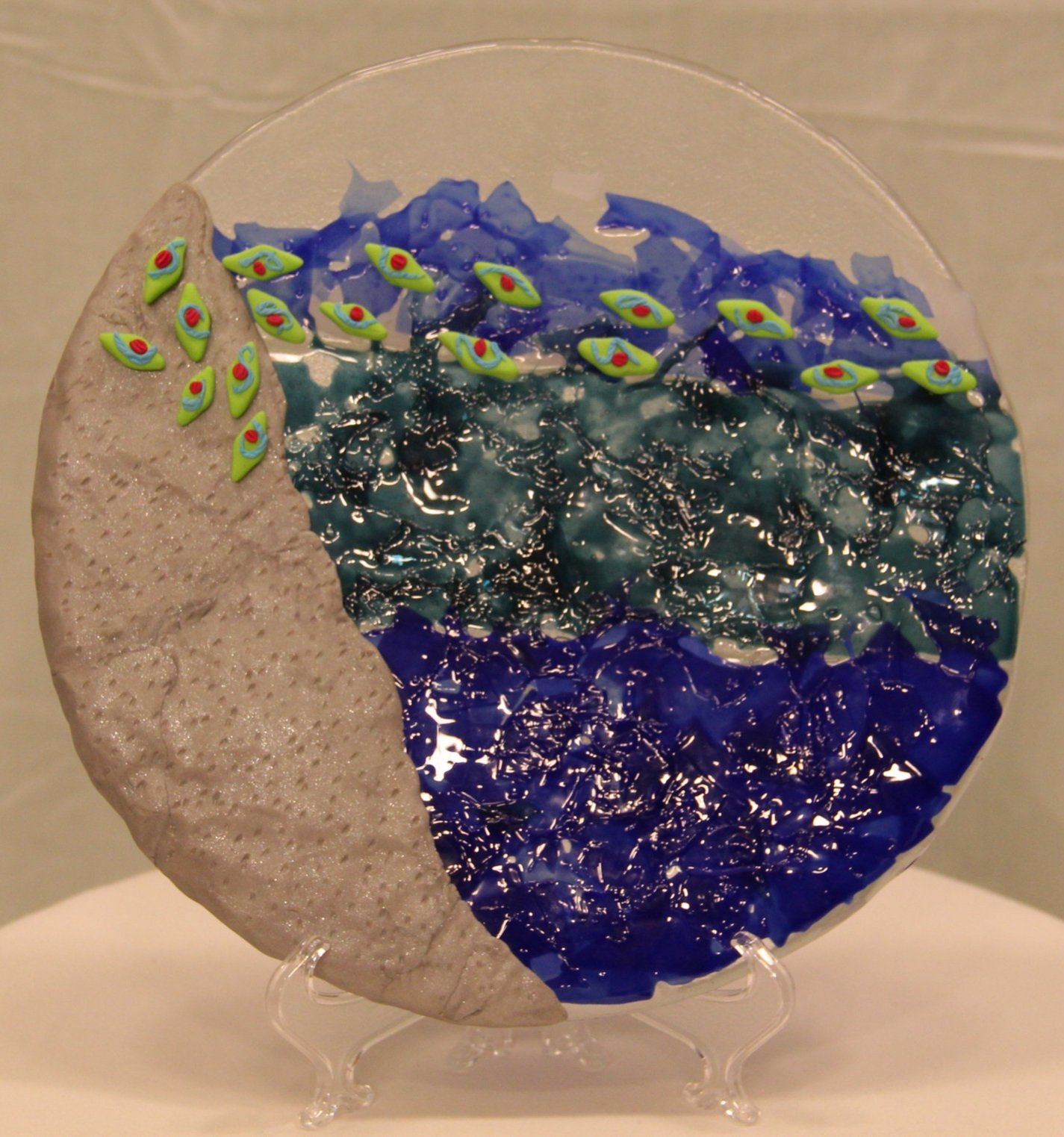
The 9-inch circular glass sculpture showcases the ocean zones and habitat of the model diatom Phaeodactylum tricornutum (PT). Our model diatom PT is found in open oceans, coastal areas, and on the continental shelf (specifically, the benthic zone). PT is a pennate diatom, which refers to its elongated spindle-like shape. It can be easily grown in a laboratory setting and thrives in a wide range of environmental conditions. This characteristic makes it an excellent experimental model for biofuel studies and molecular research.